









In Depth
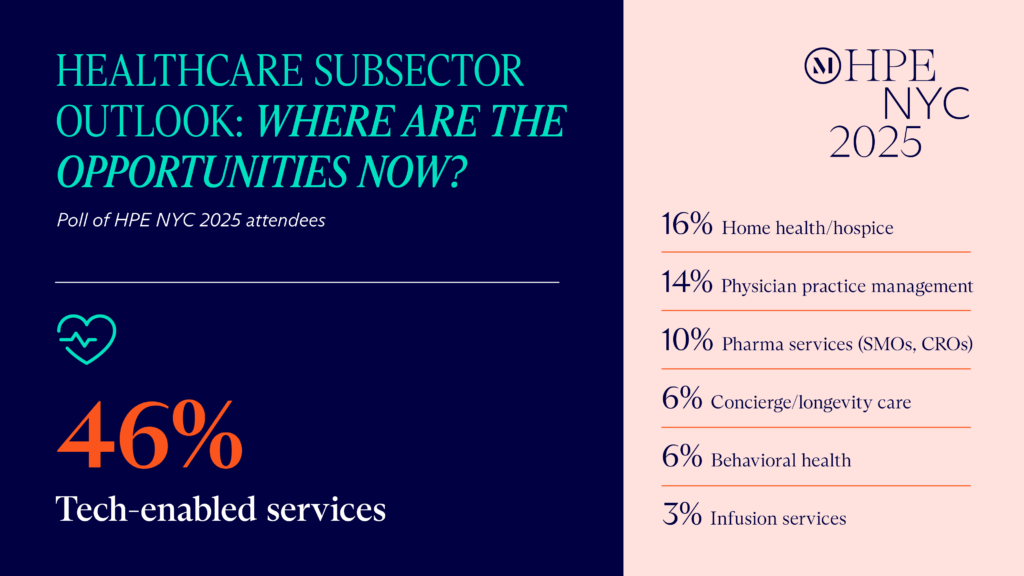
Emerging opportunities
- Development and commercialization partnerships. Strategic acquirers are increasingly targeting tech-enabled contract research organizations and commercialization platforms as initial public offerings (IPOs) and cross-border activity lag. To illustrate, our event panelists noted investments in drug manufacturing, supply chains, and drug administration (including pharmacies and infusion centers). Liquidity is consolidating around those strategic acquirers, which are historically slower to get to closing and do not pay a private equity premium.
- Pharmaceutical industry. HPE NYC panelists expect increased mergers and acquisitions activity in the pharmaceutical industry. Specifically, looming patent cliffs and the resulting need to replace lost revenue make late-stage, de-risked assets strong targets with strategic advantages. Additionally, the panelists pointed to potential for partnerships in artificial intelligence (AI) and other technologies, which would enable the development of increasingly comprehensive data collection and maintenance via life sciences services.
- Behavioral health. Demand and competition continued to grow in the behavioral health sector, with valuation rates tracking the realities of contract structures, operational stability, and reimbursements. Notably, the increasing role of technology is helping enhance success rates and implement evidence-based care while boosting efficiency in the sector.
- Investor-payor collaboration. Our panelists pointed to the desirability of pursuing potential partnerships to mitigate current pressures facing physician groups. Collaboration with payors would help reduce reimbursement lags and offer opportunities to launch lab services.
Creative exits
- Flexible pathways. Private equity is turning to continuation vehicles and sponsor-to-sponsor trades for flexible exit pathways, maximizing value as the market’s appetite for IPOs is diminished.
- Trial execution. Platforms that enhance trial execution, including in the oncology and central nervous system spheres, offer another framework for creating exits. HPE NYC panelists pointed out that, given the financial risks in the trial arena, venture capital investment is common.
- Physician practice management (PPM). The panelists further highlighted the stability and potential for tech enablement in the PPM sector, predicting an uptick in exits over the next few years. PPM organizations are less impacted by the macro dynamics and regulatory issues affecting other industry businesses, and the improvements driven by technology should solidify exit opportunities.
Regulatory readiness
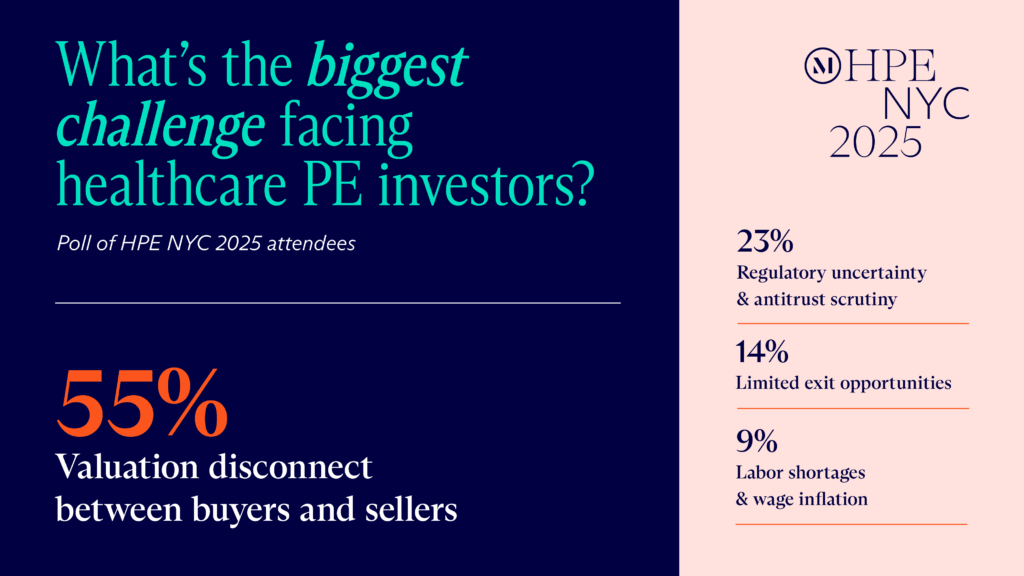
Investors face growing risks from fragmented state privacy laws, HIPAA and Federal Trade Commission enforcement, and US Food and Drug Administration scrutiny of AI. In fact, 50% of HPE NYC 2025 attendees believe that navigating complex regulatory and compliance landscapes is the most significant nonfinancial challenge faced by private equity firms investing in healthcare. Federal and state regulators are imposing new notice and approval requirements that have significant transaction implications for healthcare providers, industry operators, dealmakers, and investors.
- Baby HSR. Modeled on the federal Hart-Scott-Rodino (HSR) Act, “Baby HSR” or “mini-HSR” laws are state laws that impose notice and approval requirements on parties to certain healthcare transactions. While the timing and details vary by state, event panelists noted concern that these relatively new regulations will delay deals. As an initial matter, parties should monitor Baby HSR laws in the states in which they operate (or plan to operate) and consider the impact that doing business in a state may have on the timing of future exit transactions.
- Work with lawmakers. When new laws are proposed, it may be wise to turn to lobbyists or public relations firms in an effort to minimize current deal disruptions or future exit delays. Building relationships with lawmakers is key, as is communicating the positive results healthcare investors have achieved – and continue to achieve – in their communities.
- Readiness audits. A review of the relevant state’s filing requirements is essential before going to market. Readiness audits completed in conjunction with regulatory preparedness help effectively position assets in both strategic and sponsor exits. In addition to managing the deal timeline, that analysis may provide alternative structures to minimize filing requirements.
Conclusion
Looking toward increased activity in dynamic sectors and creative exit opportunities, stakeholders should consider the impact of regulatory reforms across the healthcare industry.
As always, we look forward to continuing the conversation with our clients and partners. To explore these topics further, please reach out to a member of the firm’s Health & Life Sciences Practice Group.